
Dental Implants Midland
Recreate Your Smile from the Roots Up

Your tooth is composed of two essential components. We’re all familiar with the white crown that makes up your smile, which is the part that most reconstructive services rebuild following tooth loss. However, there’s also something important hidden beneath the gumline – the root. Without a functioning tooth root in place, the jawbone loses vital stimulation and can begin to deteriorate, which tends to cause a sunken, aged appearance in the facial features. As if that weren’t enough, these restorations are not nearly as strong, comfortable, or long-lasting as natural teeth that are held in place by roots.
At Boyles General Dentistry & Implant Center, we want to introduce you to a truly revolutionary service that will faithfully recreate every part of your missing tooth with outstanding seamlessness – dental implants in Midland, TX. Dr. Stephen Boyles has undergone advanced training in implantology, and he will be able to carry out every step of treatment right here in our office for optimal success. Please contact us today if you are struggling with tooth loss and would like to explore your options.
Why Choose Boyles General Dentistry & Implant Center for Dental Implants?
- Dental Implant Placement & Restoration Performed In-Office
- Advanced Dental Technology for Comfortable Treatment & Precise Results
- Dentist Uses Surgically Guided Implant Placement for Optimal Accuracy
What Are Dental Implants?

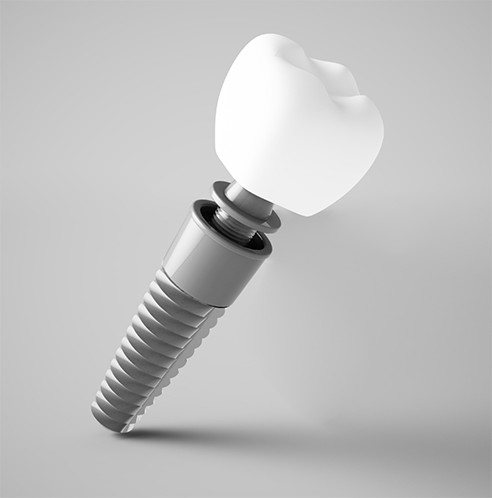
Dental implants are comprised of three main parts: an implant post, an abutment, and a final restoration. The small, screw-shaped implant post is inserted directly into the jawbone to replace the root of the missing tooth. We utilize dental implants that are constructed from reliable, biocompatible materials like titanium and zirconia, which allows them to fuse with natural bone and gum tissue to essentially become part of your jaw. Not only does this provide a reliable and strong foundation for the replacement tooth, but it also stimulates blood flow in the jawbone to keep it strong and healthy, just like a natural tooth.
Depending on how many teeth you’re missing, an abutment is used to secure a crown, bridge, or denture to one or more dental implants. Replacing teeth from the roots up gives you a smile that looks, feels, and functions just like natural, which is why dental implants are widely considered to be the gold standard of tooth replacement.
The 4-Step Dental Implant Process

Out of the many treatments available in dentistry, dental implants are among the most complex. However, here at Boyles General Dentistry & Implant Center, we specialize in this treatment and handle every step of the process. In other words, you don’t have to worry about seeing specialists in a strange office; you can continue to enjoy outstanding service from a team you already trust. Getting implants consists of four basic steps: consultation, placement, osseointegration, and restoration.
Initial Dental Implant Consultation
Before we do anything else, we first need to meet with you for a consultation. This appointment is important because it allows us to determine if you’re a good candidate for this treatment and plan the procedure carefully for optimal success. We’ll ask questions about your medical history and any medications you’re taking, and we’ll take highly detailed images of your oral cavity with our CT cone beam scanner. With all this information, we can move forward with dental implants with complete confidence.
Dental Implant Surgery
Once we’ve completed a consultation and confirmed that dental implants are the right choice for the patient’s circumstances, we can then perform the surgical placement of the implant(s) into the jawbone. By doing this, the implant will effectively take the place of the root, stimulating the tissue and creating a strong foundation. Dr. Boyles will personally perform this procedure, using modern technology, including surgically guided placement when needed, to ensure the most precise and successful results possible.
Dental Implant Osseointegration & Abutment
After the implant or implants are seated in place, you will need to undergo a period of healing. During this time, the natural bone tissue bonds with the biocompatible posts. This process, called osseointegration, usually takes between three and six months to complete. When we’re certain the posts are secure, we’ll then make small incisions in the gum tissue to insert the abutment pieces, which connect the posts to the restoration.
Delivery of Dental Restoration(s)
After a couple of weeks, the gum tissue should be fully healed and ready for us to take impressions for the restoration. The dental lab will fabricate your custom restoration to look exactly like real teeth, so no one will be able to tell you have replacements. When they are ready, you’ll return to our office to have your prosthetic teeth attached to the implants and complete your brand-new, lifelike smile.
Benefits of Dental Implants

When you lose even one tooth, your jawbone deteriorates because it is no longer stimulated by the root. This makes your remaining teeth lose support. Over time, this can lead to alignment issues and an increased risk of decay, gum disease, and additional tooth loss. Dental implants are the only solution to stop these complications.
Additionally, dental implants offer a wide variety of other important benefits that you simply can’t get with other tooth replacement options, such as:
- Over a 95% success rate.
- Looks and feels natural.
- Does not alter healthy teeth.
- Preserves your jawbone’s density.
- Stops dental drift.
- Supports your facial structures.
- Cost-effective.
- Long-term solution.
Who Dental Implants Can Help
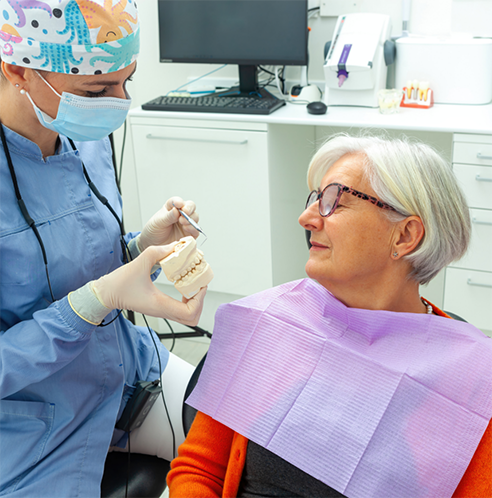
Dental implants are an excellent choice for any healthy adult suffering from tooth loss. Whether you’re missing one tooth, several teeth, or an entire arch, we can create a treatment plan to help you regain a complete, confident smile. Once we’ve confirmed that you’re a good candidate for dental implants, we will help you choose the restoration that’s best for you depending on how many teeth you’re missing:
Missing One Tooth
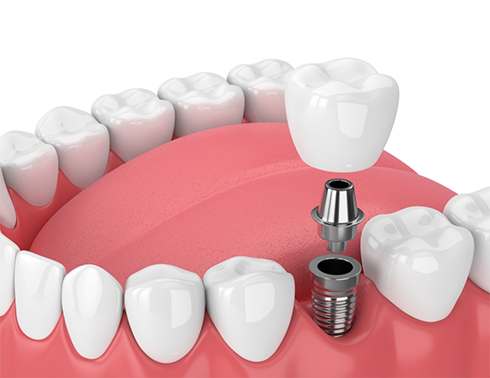
If only one tooth needs to be replaced, a customized, all-porcelain dental crown atop a single dental implant post is ideal because it will not negatively interfere with nearby healthy teeth.
Missing Multiple Teeth

Alternatively, if the patient has two to four missing teeth that appear in a row, an implant-retained bridge can work wonders in replenishing the structure. Instead of supporting each tooth with one implant, the entire restoration can be successfully placed with two implants on either side of the gap that serve as “anchors.”
Missing All Teeth
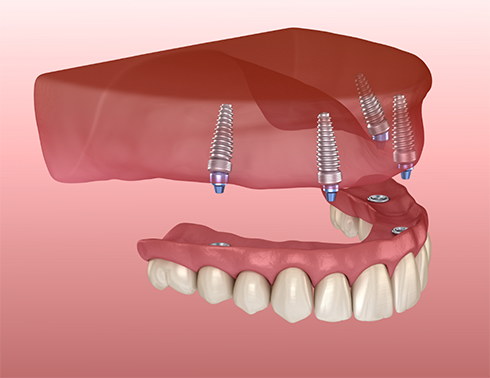
If a patient’s tooth loss is more significant than the above examples, implant dentures can be used to replicate an entire arch of the smile all at once. Instead of staying in place through natural suction and/or connections to nearby teeth, these customized dentures are anchored to a small number of dental implants that have been placed in strategic positions. The result is cost-effective, high in quality, and wonderfully lifelike.
There are two major types of implant dentures. If the patient wants their new prosthetic to be as identical to natural teeth as possible, a hybrid denture is the right choice. Dr. Boyles will fix the denture in place permanently so that it can only be removed by us for regular maintenance.
Learn More About Implant Dentures
Alternatively, for patients who have extensive jawbone loss that prevents them from getting traditional implant dentures, we may recommend All-On-X dental implants. This unique technique for placing an implant denture takes advantage of the parts of the jawbone that are naturally the strongest. This allows patients with less jawbone density to enjoy all the benefits of implant dentures, typically without preliminary procedures like bone grafting.
Learn More About All-On-X Dental Implants
Snap-On Dentures
Snap-on dentures are unique in the fact that they’re removable. Instead of being permanently affixed within your mouth, you’ll be able to snap your denture onto your implants yourself. Sometimes referred to as removable implant overdentures, this treatment option allows you to speak with ease and utilize your prosthetic without needing messy adhesive.
Understanding the Cost of Dental Implants
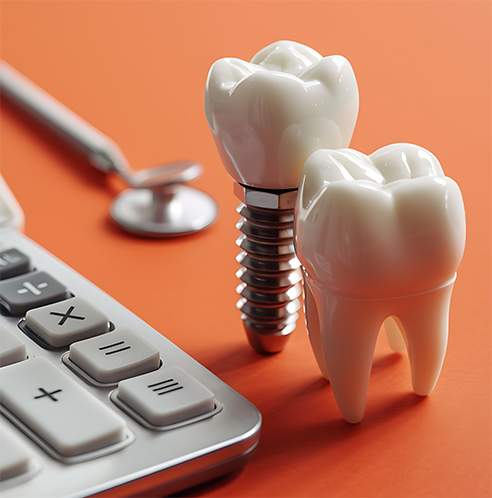
Before making any significant purchase like tooth replacement, you should carefully consider the cost and whether it’s worthwhile. Before we can give you specific numbers, however, we need to meet with you in person to examine your mouth and put together a personalized treatment plan. Too many variables affect the cost, and we want you to have an accurate idea of how much you’ll pay before you make a potentially life-altering decision.
Preliminary Treatments & Dental Implant Surgery

In a comprehensive treatment plan, several separate procedures can be grouped. However, these treatments come with their own pricing. For instance, if you need a bone graft, and another implant patient doesn’t, your amounts will be different. Also, the placement surgery itself can vary based on how many implant posts you’re receiving and where they are within the arches.
The Parts of Your Dental Implant

When restoring a car, you must consider the individual parts needed to calculate the overall cost. The same goes for dental implants. Depending on your needs, we’ll pick from the various posts, abutments, and restorations and identify the combination best suited for your mouth. If you like, we can break down the cost in greater detail, going over the individual parts of your implant replacement plan.
How Dental Implants Pay for Themselves

As with many other products and industries, when it comes to pricing for tooth replacements, you often get what you pay for. Traditional dentures and bridges are cheaper in the short term, but dental implants are much higher quality and a better investment in the long term. Over the years, the cost of replacing dentures and bridges adds up, whereas dental implants can go for decades and still function and look great!
Does My Dental Insurance Cover Dental Implants?
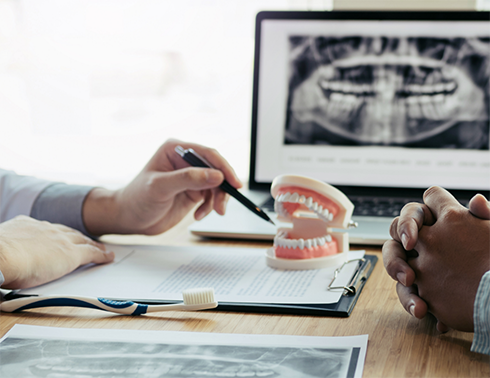
Generally, dental insurance policies do not cover dental implants because they are considered elective. However, if you require certain preliminary treatments, like gum disease therapy or tooth extraction, these may be partially paid for with insurance. Also, the restoration we attach to your dental implants may be included in your benefits, lowering the overall cost. Our front desk team will look closely at your plan and try to find ways to help you save on your dental implants.
Making Dental Implants Affordable

Insurance isn’t the only method of lowering your costs. For those who don’t have benefits through their job, we offer an in-house savings plan, which provides substantial discounts on advanced services in addition to complimentary preventive care. If you’d like to pay for implants over time, we can also assist with the application process for low-interest financing. Reasonable monthly installments are much easier to pay than a larger one-lump sum!
Advanced Dental Implant Procedures
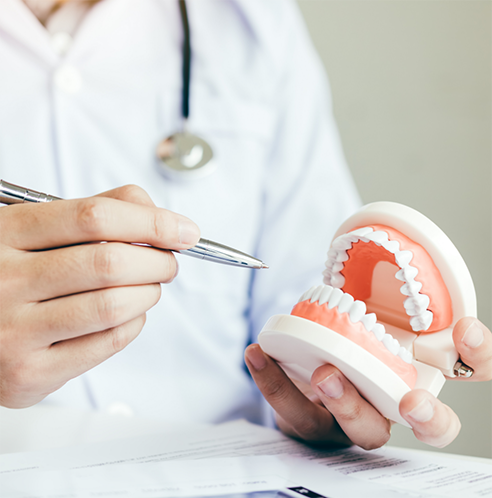
Before a patient can get dental implants, they must have an adequate amount of healthy jawbone to safely support the prosthetic tooth roots. In the past, this requirement made dental implants unavailable to many patients with thin or brittle jawbones, but thanks to bone grafting, now even more people can benefit from the most complete tooth replacement solution available today. For this, Dr. Boyles will build up and strengthen your jawbone using either your own tissue, donated tissue, or a lab-made bone grafting material so that your jaw is strong enough to hold implants.
Dental Implant Technology
Implant placement is one of the most complex surgical procedures in dentistry. Our team is dedicated to giving patients the best results possible and keeping risks at an absolute minimum. To ensure precision during dental implant surgery, we use computer-guided placement technology, which significantly reduces the chances of complications or errors. Although our dentist and team proudly have a steady hand and years of advanced training and experience, several studies have found that this technology improves implant placement, so we have integrated it into our practice to benefit our patients.
Computer-Guided Surgery and Implant Placement
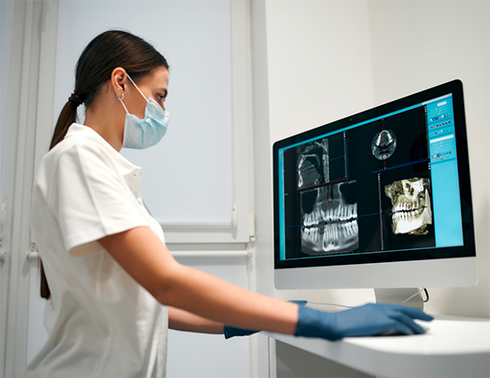
Although our team is highly trained and experienced in oral surgery and has steady hands, they are still human and are not perfect all the time. That’s why, to reduce the likelihood of any complications or mistakes, we utilize advanced technology to guide our actions during surgical procedures, when precision matters most. Whether undergoing implant placement or another complex surgery, you can feel confident that your smile is in our expert’s caring, capable hands.
Dental Implant Failure & Salvage

The chances of experiencing dental implant failure are slim, especially since these prosthetics have a 95% success rate upon initial placement. However, problems can occur that can leave your implant vulnerable. From peri-implantitis caused by poor oral hygiene, failed osseointegration, improper placement, and even facial trauma, Dr. Boyles can implement appropriate strategies to try and save your dental implant(s) and keep your smile in the best possible shape.
Learn More About Dental Implant Failure & Salvage
Dental Implants FAQs
How Long Do Implants Last?
The lifespan of implants can increase or decrease based on how well you take care of them. When properly maintained, implants can last for 30 years or longer! Although your implants can’t get cavities, you need to prevent a gum infection that could put your restored smile at risk. Fortunately, keeping your implants in excellent condition is fairly simple—you care for them as you would normal teeth with daily brushing and flossing and regular dental visits. For added protection, you should drink plenty of water and limit your intake of sugar and carbohydrates.
Does Getting Dental Implants Hurt?
During the implant placement and abutment procedures, we will perform minor surgery, but your mouth will be completely numb for these treatments. As a result, you will not feel pain until after the anesthetic wears off. At that point, you may experience some discomfort as you heal. We recommend taking an over-the-counter pain reliever and applying a cold compress to your face to control any potential swelling. Also, you should take it easy for a couple of days to allow your body to recover.
How Long Does Implant Treatment Take?
Overall, the entire process can take up to a year to complete. However, your timeline will be determined by several factors, including whether you require preliminary work like gum disease therapy or tooth extraction. Your recovery time will also depend on how quickly you heal and your bone tissue envelopes the implant. During your initial consultation, we can provide an estimated timeline for your implant treatment, giving you a clearer idea of what to expect moving forward.
Am I a Good Candidate for Dental Implants?
Before we begin treatment, we need to make sure you qualify for implants. Otherwise, it’ll be a waste of everyone’s time, money, and effort! To be a good candidate, you must be in good overall health, meaning if you have diabetes, for instance, it is under control. You also need to have enough jawbone strength to sustain the implants and have a healthy, infection-free mouth. When you come in for your consultation, we will check for all these requirements, ensuring that your implants are successful. Keep in mind that even if you don’t qualify immediately for implants, we’ll work with you to get into a better position for them.